GitHub Repo to Multi-Agent Developer Pipeline
Stand up a parallel swarm of AI dev agents that route costs to cheaper model tiers automatically
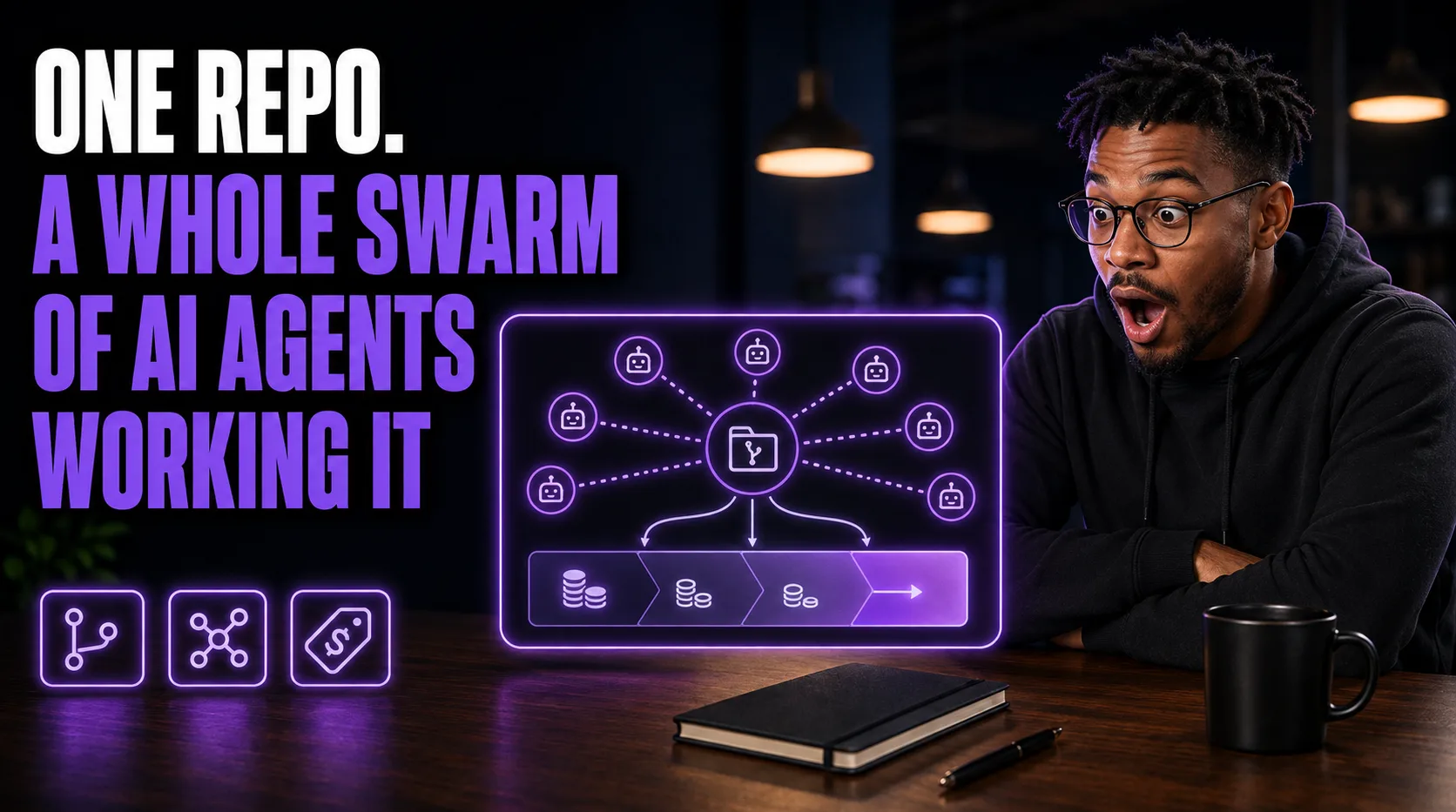
Deploy a Parallel Agent Swarm From an Open-Source Repo
Run coding, testing, and security agents at once with cost routed to cheap tiers
A single agent working through your repo one file at a time can't keep pace with a real deadline, and paying premium-tier rates for every boilerplate change adds up fast. This guide clones an open-source multi-agent orchestration framework and configures it to run up to 60 sub-agents concurrently against a shared memory matrix — so coding, testing, and security review happen at the same time instead of in sequence. A cost-routing layer sits underneath it, sending routine syntax checks to cheap or free model tiers and reserving premium reasoning for the architectural decisions that actually justify the spend.
Agent Swarm Orchestration Master Prompt
Act as a Lead Software Architect and Multi-Agent Systems Engineer specializing in automated repository workflows. I have cloned an open-source framework from GitHub and want to deploy a parallel agent swarm to execute a development task. Based on the project details I provide, generate: 1. The Core Task Assignment — a structured breakdown slicing the main objective into distinct parallel instructions for individual coding, testing, and security agents. 2. Parallel Swarm Structure — an optimized setup blueprint configuring up to 60 sub-agents to run concurrently while sharing a single, unified memory matrix. 3. Dynamic Cost-Routing Ledger — a rule-based model allocation scheme that offloads minor syntax checks and simple tasks to free or low-cost model tiers, reserving premium models strictly for high-context architectural changes. 4. Terminal Setup Script — a short bash snippet to initialize the workspace, download dependencies, and boot the parallel swarm via Claude Code. Format the configurations as clean text blocks. Here is my project data:

Target GitHub Repository: ___
Primary Task Objective: ___
Primary Stack/Language: ___
Cost Constraints: ___