One Brief, Three Deliverables: Slides, Site, and Design
Use Claude's design capabilities to turn one creative brief into multiple client-ready assets
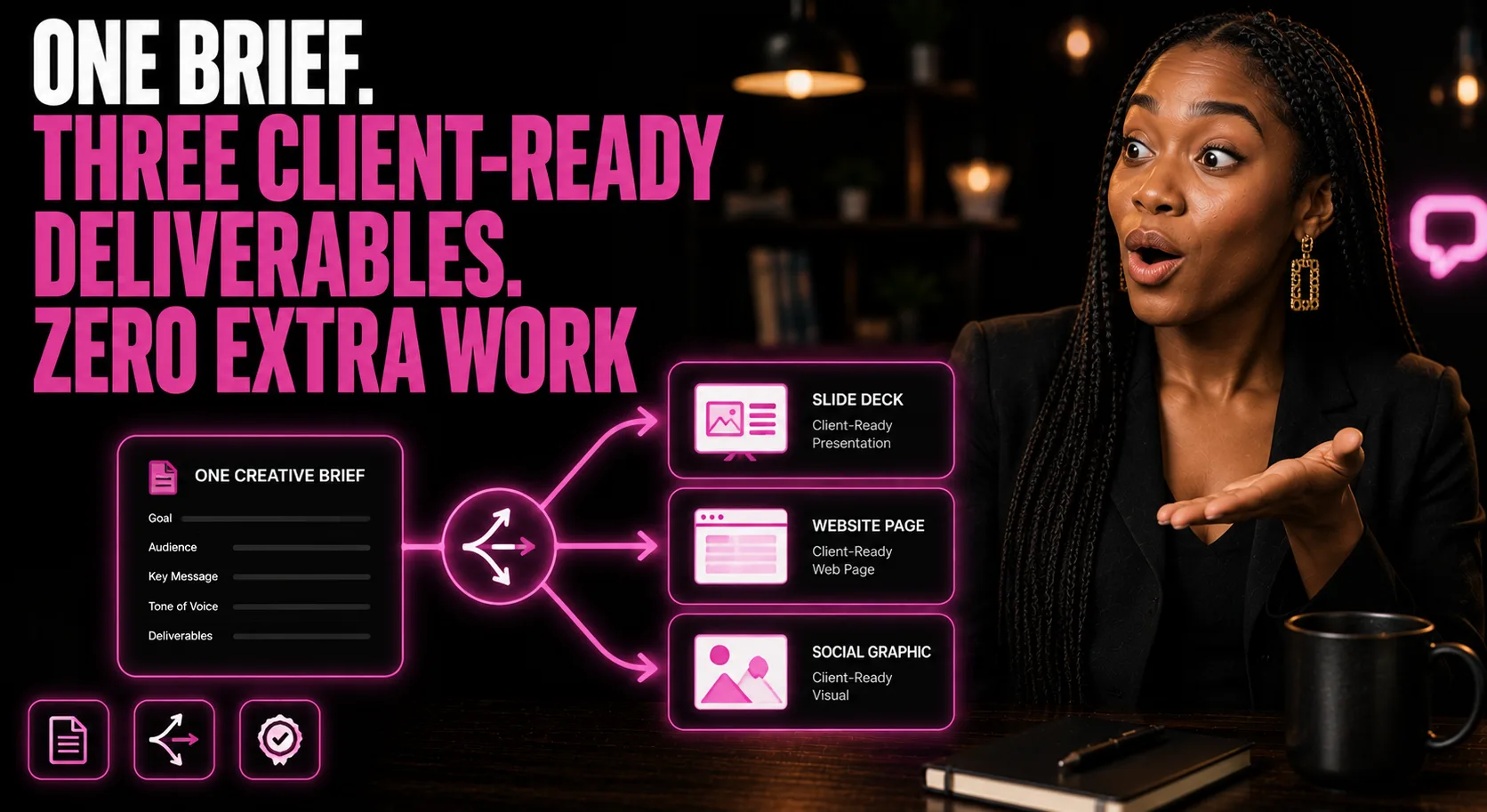
Reuse the Brief, Not the Prompt
How one creative input drives slides, a site, and a design without losing coherence
Most teams re-brief for every format because that's what feels safe: a fresh prompt for the deck, a fresh prompt for the site, a fresh prompt for the one-pager. What actually keeps everything on-brand and on-strategy is the opposite move, one detailed brief covering offer, audience, proof, tone, and required sections, then a separate structure pass per format before any copy gets written. Claude turns that single strategic input into a slide-by-slide or section-by-section map, then fills each unit with headline, copy, CTA, and design direction together. The output isn't three disconnected assets; it's three surfaces of the same argument.
Multi-Format Design Prompt Set
Brief prompt: "Act as a senior conversion strategist. Build a complete brief for my [website / pitch deck / one-pager design]. My offer is [an agency's Q4 client proposal], audience is [prospective client's marketing director], goal is [signed proposal], tone is [confident, no-fluff], and proof points are [case study results]. Ask for missing context first, then create the brief."

Structure prompt: "Using the brief above, create the structure for this [website / slide deck]. List each section or slide in order, the purpose of each, and the message it must communicate."

Draft prompt: "Write the first draft for this [format]. For each section, include headline, supporting copy, CTA, visual/design notes, and any trust elements needed. Avoid generic claims."

QA prompt: "Audit this [website/deck/design] before launch. Flag generic AI copy, weak proof, unclear CTAs, layout issues, missing objections, mobile problems, broken user path, and the top fixes in priority order."