How to Re-Engage Cold Leads Without Sounding Desperate
A breakup email gets more replies than another round of follow-ups
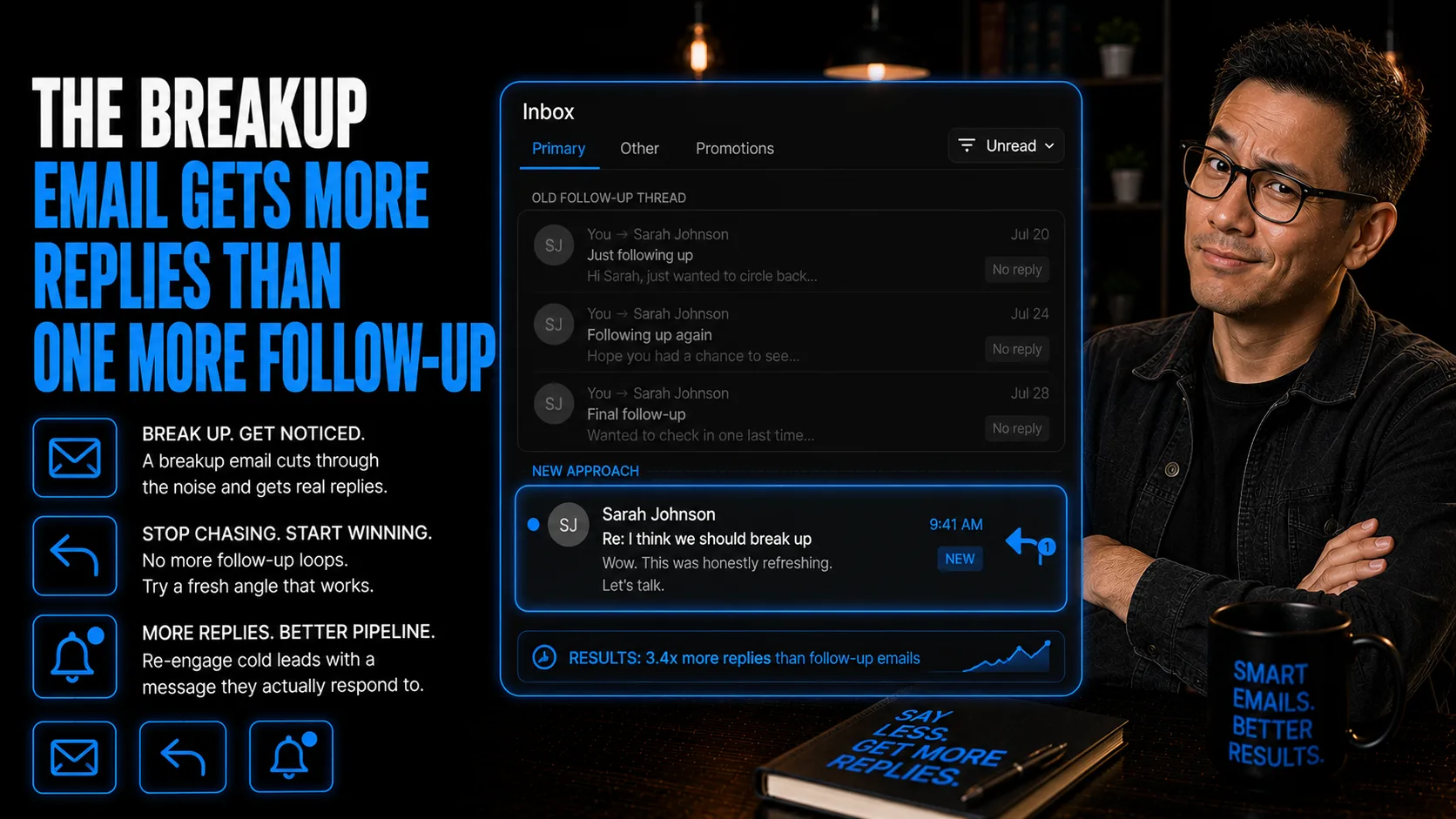
Why Cold Doesn't Mean Dead
The overview every re-engagement sequence needs before you write a single subject line
A cold lead isn't a dead lead — it's someone who was interested enough to opt in, then life happened. Inbox overload, a shifted priority, a moment where your emails just weren't the most urgent thing. Most lists have 20-40% of subscribers sitting in this zone: not unsubscribed, not engaged, just quiet.
The mistake most marketers make is treating cold leads with more of the same — another discount, another "just checking in," another push. That reads as desperate and trains people to ignore you further. The fix is a pattern interrupt: a short, honest sequence that acknowledges the silence directly instead of pretending it isn't happening.
This module walks through why re-engagement sequences work, what makes a cold lead worth saving versus worth removing, and how to frame the ask so it feels like a genuine check-in rather than a sales tactic in disguise.
Cold Lead Breakup Email Writer
Write a 3-email cold-lead re-engagement sequence for my list. Here's the context:

- What I sell: [product/service]
- Who these leads are: [describe the audience — how they originally opted in]
- How long they've been cold: [60-90 days / other window]
- My brand voice: [casual and warm / direct and no-fluff / other]

Write all three emails:

1. The honest check-in (subject + body, under 100 words) that asks if they still want to hear from me, with zero pitch.
2. The value reminder (subject + body) that shares one genuinely useful insight or result, sent only to non-responders.
3. The clean break (subject + body) that tells them they'll be removed unless they click to stay.

For each email, keep sentences short, use one clear call to action, and make it sound like a real person checking in — not a marketing automation. Avoid guilt-tripping language or fake urgency.