The Difference Between a Slow Month and a Stopping Point
A framework for telling a temporary dip apart from a real dead end
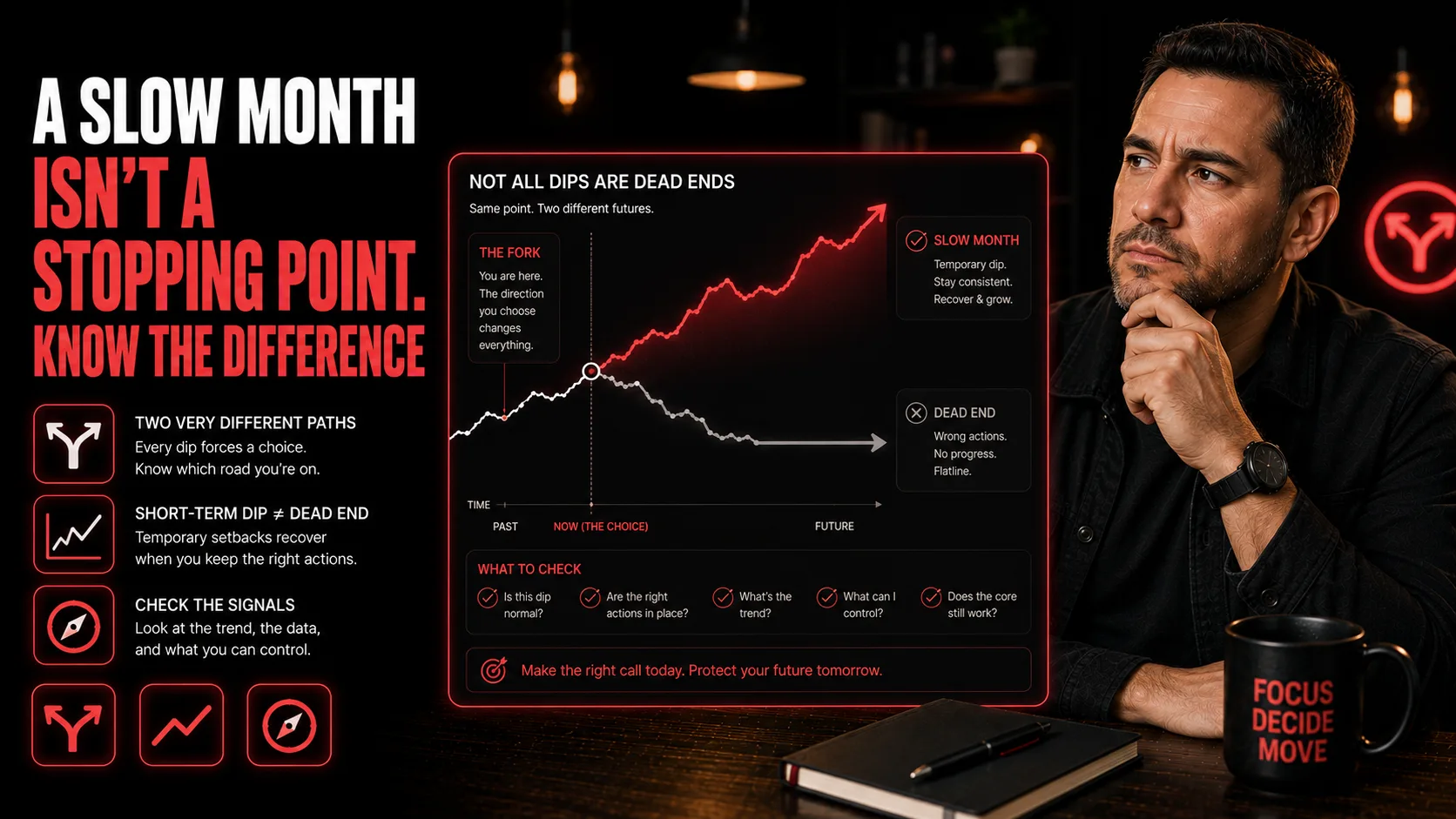
A six-step protocol for deciding whether to push through or walk away
Outcome Line: A decision framework that tells you whether the slow stretch you're in is a temporary dip worth pushing through or a dead end worth quitting, so you stop guessing with your livelihood.
Who It's For
You're a marketer or affiliate in a slow patch, and you can't tell what it means. Half of you says "push harder, this is the part where everyone quits." The other half says "maybe this just doesn't work and I'm throwing good time after bad." Both voices sound right. So you either grind on a dead thing out of stubbornness, or you bail on a good thing right before it pays. You don't have a quitting problem. You have a diagnosis problem.
What You'll Have
A written self-assessment you run during any slow stretch, six questions that separate a temporary dip from a true dead end, plus a clear rule for what to do in each case. A way to decide on evidence instead of mood.
The one problem this solves
Slow months all feel the same from the inside, but they are not the same thing, and treating them the same is how people lose years.
Seth Godin's whole point in The Dip is that quitting is sometimes the smartest move and sometimes the dumbest, and the trick is telling which situation you're in. He names two very different slow stretches. The Dip is the long, hard middle, the gap between starting something and getting good enough to win at it, where most people quit precisely because it's hard. Push through the Dip and you come out the other side, often to the rewards almost everyone else gave up on.
The Cul-de-Sac is different. It's a dead end. You work and work and nothing changes, and no amount of extra effort will change it. Pushing through a Cul-de-Sac isn't grit. It's just slow bleeding.
The slow month in front of you is one or the other. Same feeling, opposite right answers. This framework tells them apart.
What this gets you
You stop making the most expensive mistake in business, quitting good things too early or clinging to dead things too long, because you're deciding on evidence instead of mood. You push through the stretches that pay and walk away clean from the ones that won't, which frees your time and energy for work that actually moves.
Seth Godin's argument in The Dip is that the winners aren't the ones who never quit, they're the ones who quit the right things at the right time and pour everything into the few worth finishing. For a solo marketer, that judgment is the whole game. A slow month feels identical whether you're three weeks from a breakthrough or a year into a dead end. This framework is how you tell which one you're living, so the slow stretch becomes a decision you make on purpose instead of a feeling that makes the decision for you.